
“Not only does answering questions about burgers help you to cook your burgers better, but it also reveals applications to all sorts of other situations.
Once you start opening your mind to the wonders of the kitchen, once you start asking what’s really going on inside your food while you cook it, you’ll find that the questions keep coming and coming, and that the answers will become more and more fascinating.”
— Kenji Lopez-Alt (The Food Lab)
I eat 2-4 eggs a day. Assuming I’m home 300 days a year, I’ve cooked at least 15,000 eggs for myself. And I still mess them up occasionally.
Cooking is interesting to me because I have been making food for about 16 years and as the saying goes, the more I learn, the more aware I am that I know nothing.
I make food at home because it’s practical, cost effective, and I usually feel better than I do after eating at restaurants. Cooking used to be a chore. Then I brainwashed myself into liking it.
Once I accepted that part of my life is going to be spent meal-prepping and chopping vegetables, I started to view it as meditation. Now cooking is one of my favorite hobbies. The only thing I don’t like is cleaning up.
I like making new recipes because it forces me out of habits and expands my range.
Making a recipe for the first time is time-consuming and awkward, but rewarding. The second time goes faster and by the third time, it’s in the toolkit.
Better ingredients. Better pizza.
— Papa John
Many of the ideas I have about cooking are from other people.
The two most important cookbooks that I own were given to me as gifts. Maybe they were gifts, maybe they were hints to get better at cooking.
- The Food Lab by Kenji Lopez-Alt
- Salt, Fat, Acid, Heat by Samin Nosrat
“Season food with the proper amount of salt at the proper moment.
Choose the optimal medium of fat to convey the flavor of your ingredients.
Balance and animate those ingredients with acid.
Apply the right type and quantity of heat for the proper amount of time.Do all this and you will turn out vibrant and beautiful food, with or without a recipe.”
— Samin Nosrat (Salt, Fat, Acid, Heat)
Salt, Fat, Acid, Heat is about cooking intuitively and The Food Lab is more about the science and precision. Both are easy to read and balance each other well.
The Food Lab is not only one of my favorite books about cooking, it is one of my favorite books period. Everyone who cooks would benefit from reading it because it will influence the way you cook food for the rest of your life.
A few examples.
- You want meat to be room temperature before cooking it.
- When you sear something, it must be dry. If there is moisture on it, then all the heat goes to evaporating the moisture, not browning it (called the Maillard effect). By the time the moisture is gone, your food is getting overcooked.
- Contrary to popular belief, searing a steak does not “lock in the juices.”
- Use Diamond Crystal Kosher Salt.
- Don’t trust anything he says, experiment and observe for yourself.
I cook more recipes from Cook Beautiful by Athena Calderone than I do from the books above and I get more recipes from TikTok and Instagram than anywhere else.
What’s nice about TikTok over Instagram is you can save the videos to your phone, so you can pause, fast forward, and rewind. TikTok and YouTube are both great for reviews and setting up kitchen equipment, too.
TikTok showed me how to make a stainless steel pan non-stick.
Recipe Organization
I use Dropbox Paper for writing recipes down. It’s clean, simple, and accessible anywhere.
Most recipes have a format like this: “1 tablespoon of soy sauce.”
I put the ingredient first because when I’m at the grocery store, the main question is what to buy. I can figure out how much I need after that.
Visually, it makes more sense to see the ingredient first and the quantity second.
I screenshot the ingredient list or type them into my grocery list on my Notes app.
Visual Examples
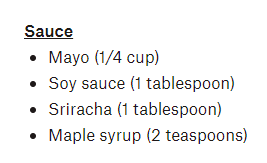
Ingredient first, quantity second
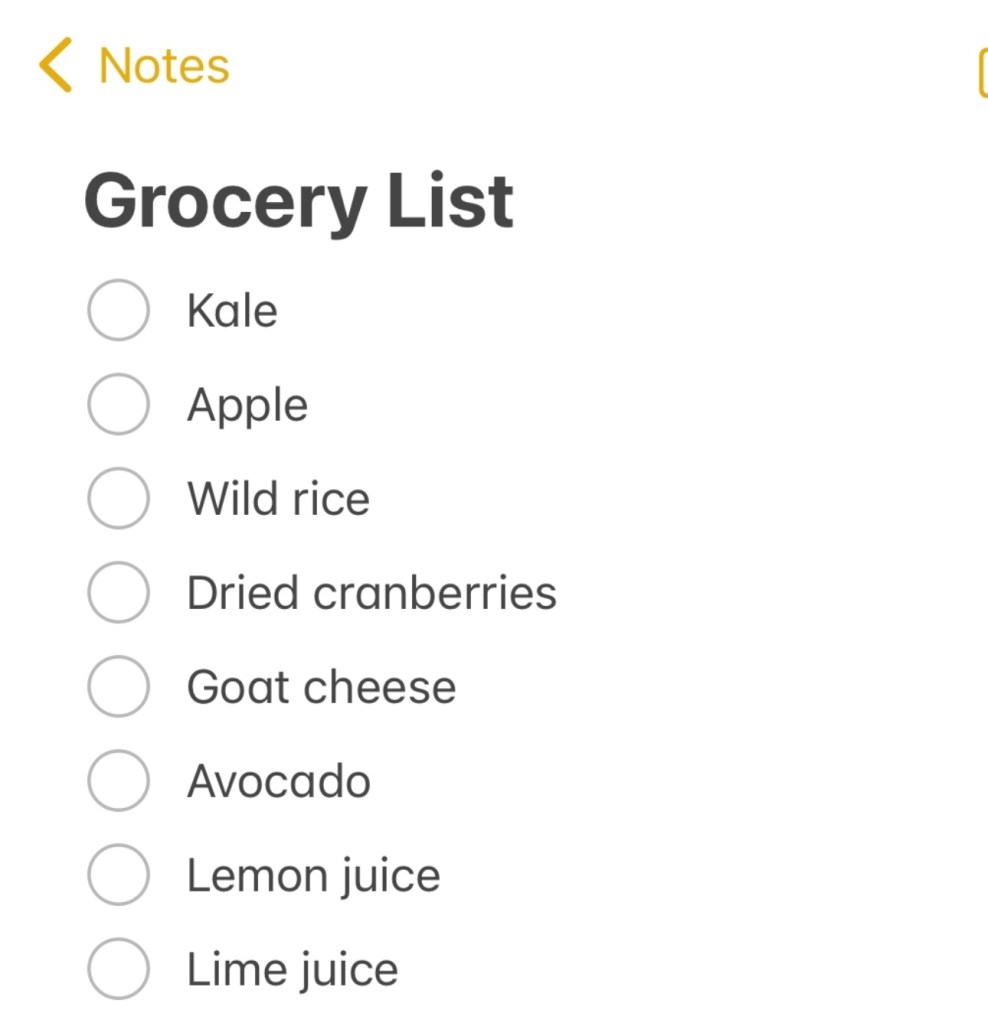
I like to bold the ingredients in the recipe to avoid forgetting anything.

Kitchen Organization & Mise en Place
Mise en place (“mee zahn plas”) is a French culinary phrase which means “putting in place.”
When all the ingredients are organized, chopped, portioned, and ready to go, you realize that most of cooking is in the prep and the cooking part is usually easy.
This reduces stress and this idea extends to things outside the kitchen. I think about this concept all the time.
Equipment
— Kenji Lopez-Alt The Food Lab“You can’t uncook a steak.”
Cooking is the transfer of energy from a heat source to your food. The heat changes the shape of proteins and once you do that by adding energy, you can’t take it away.
It’s interesting how this applies to everything. You can’t “uncook a steak” in a relationship either. We can’t undo things that have happened.
In other words, don’t burn your food.
The Food Lab influenced the equipment I own. The equipment section in the book is remarkably practical. For the curious that want more, it also includes pages-long explanations on things like stainless steel vs. aluminum, and when you would use each (e.g. Stainless steel is very easy to maintain, but it is terrible at conducting heat. Aluminum is good at conducting heat, but isn’t dense, so it’s bad at retaining heat).
What I Use
The pan I use by far the most is the All Clad D5 Stainless Steel 10-inch frying pan. It takes longer to heat up than an aluminum non-stick pan, but food tastes better on it and I think I’m less likely to get cancer from it.
All Clad D5 Stainless Steel 5-piece Set (~$500)
These are what come in the set — yes, manufacturers count lids as a piece.
- Fry Pan (10-inch)
- Sauce pan w/ lid (3-quart)
- Sauté pan w/ lid (3-quart)
- Cast Iron Skillet ($20 – $35) — Mine is 10.25 inches and someone gave me a 12-inch skillet that I like better (note: it is very heavy and takes longer to clean). No need to spend a lot of money on these, as the quality is effectively the same across all real cast iron. I use a Lodge.
- Non-stick Frying Pan ($20 – $35) — Don’t fall in love with this. We want to throw them away regularly when they get cut and scratched because we do not want to get cancer from the chemicals in the non-stick materials. When the pan is scratched, those non-stick materials get in our food. Thankfully, most are inexpensive.
- Dutch Oven or Large Pot ($300) — The Le Creuset 7.25 quart Dutch Oven is excellent.
- Air Fryer (Less than $100) — They do not hold that much, so the bigger the better.
- Half Sheet Pan ($30) — I waited way too long to get one of these. Make sure it comes with a cooling rack grid.
- Food Prep Glass Containers ($30) — I use these. Instant purchase. Don’t even think about it.
- Instant Pot ($100 – $130) — These are annoying because the cooking time is misleading. If you select 22 minutes, it doesn’t take 22 minutes. It takes 22 minutes after it pressurizes, which takes at least 20 minutes. However, for meal prepping, they pay for themselves within 3 uses.
- Sous-vide (~$250 – $500 for the full setup) (I own the Joule – the Anova is the other popular one) — Not a need, but it is simply the best way to cook food. If you get one, you will need a food vacuum. Also buy a plastic tub for the water and a silicone lid so the water doesn’t evaporate.
- Oversized cutting board ($30)
- Utensil holder ($15- $45)
- Utensils — I use several silicone spatulas. For the utensils I use the most, I buy multiple so I don’t have to worry about whether one is in the dishwasher.
- Loose salt cellar ($15) — Most people do not use enough salt on food at home. Once you start using loose salt, you will rarely use your salt shaker. The main advantage is a salt cellar frees up one of your hands to continue cooking. A salt shaker usually requires two hands.
- Good Dish Towels — I like Crate & Barrel’s. I use these more than almost anything else in my kitchen.
- Food Scale ($20) — Consistent measurements lead to consistent results. The Taylor scale I have from Costco is excellent.
- Food Thermometer ($20 – $150) — I use the Thermapen. It is pricey ($150), but it is supposedly the best because it provides accurate and instant read-outs. Seems likely will last a very long time.
A Good Knife
A good knife is sharp and fits well in your hand. You could spend days researching knives. If you don’t have a strong preference, go to Costco. This is safe advice for almost anything. The main thing is making sure you keep it sharpened.
Obviously, there are several other things that could qualify as The Basics. It doesn’t matter what equipment you use, as long as it works for you.
Just start making food.
I will update this page periodically with more recommendations or do separate posts so it’s easy to search. I uploaded several of the recipes I like here. If you want to share recipes with me, send them to: extraguacblog@gmail.com
See also:
- Food & Recipes (extra guac)
 extra guac